
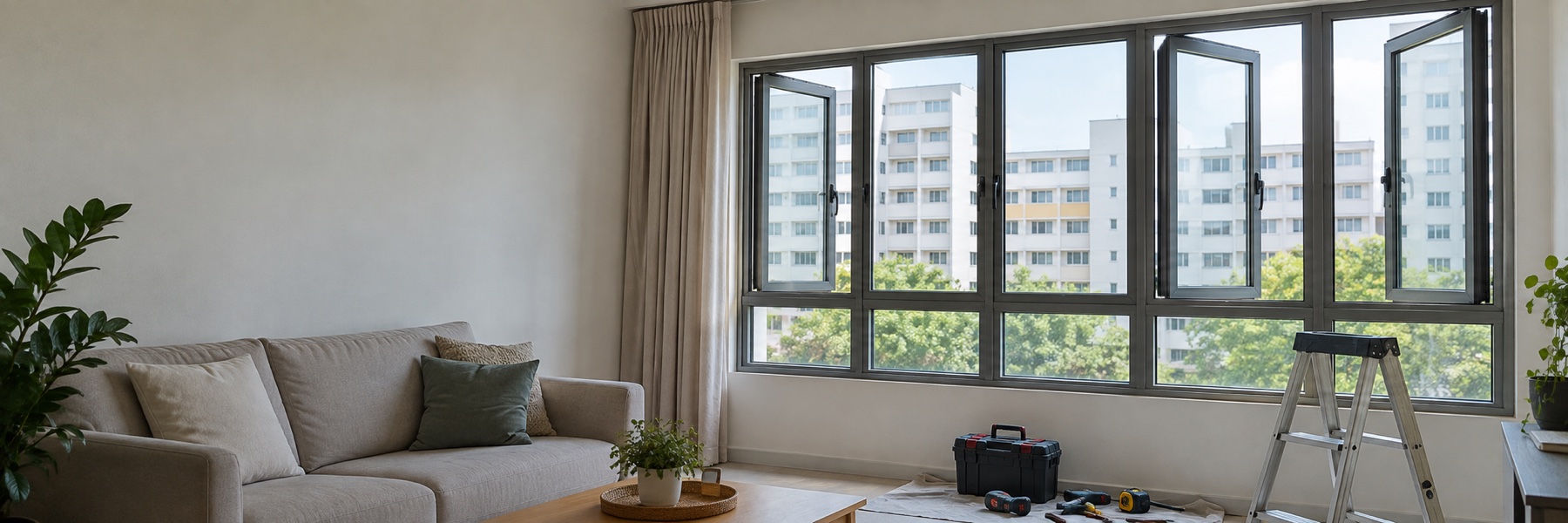
Plan a Safe, Suitable Replacement
Replacing Windows in an HDB Flat
Replacing a window starts with understanding what has failed and what the existing opening will allow. A loose sash, damaged frame, difficult sliding panel or persistent leak may call for different work. We begin with the condition of the current window and the way the room is used, then discuss replacement options that suit the flat rather than assuming every opening needs the same design.
Guardian Windows' window installation service already covers casement, sliding and top-hung styles. For an HDB project, the choice must also account for the existing window type, the building's appearance, safe operation and applicable HDB requirements. This page explains the decisions an owner should expect to make before approving the work.
For a resale flat, take stock of all openings before deciding which to replace. A room-by-room list can distinguish cosmetic wear from operational faults and help you plan work around occupied rooms. It also makes clear whether you want one problem window addressed now or a coordinated replacement across the flat.
When Replacement Makes Sense
Some problems can be repaired without replacing the entire window. A worn hinge, roller, latch, seal or stopper may be a component issue. Damage to the frame, repeated water entry, badly distorted panels or several failing parts can make replacement the more sensible route. An on-site assessment helps separate these cases. A quote should say whether it covers a repair, one panel, a complete window assembly or several openings.
Safety deserves attention before appearance. If a panel appears loose or at risk of falling, keep people away from it and arrange a qualified inspection promptly. HDB's window care guidance advises owners to take precautions and engage an approved contractor when a window may be unsafe. Routine wear should also be addressed before it turns into a more serious fault.
For smaller faults, see our existing repair and servicing overview. The aim of an assessment is to explain the options clearly, including what can remain in place and what needs replacing.
Photographing the fault can be useful, but avoid leaning out or testing a panel that appears unstable. Note whether the issue affects opening, closing, locking or water resistance. This information helps the assessor focus on the problem while leaving the safety judgement to someone who can inspect the fixing and frame in person.
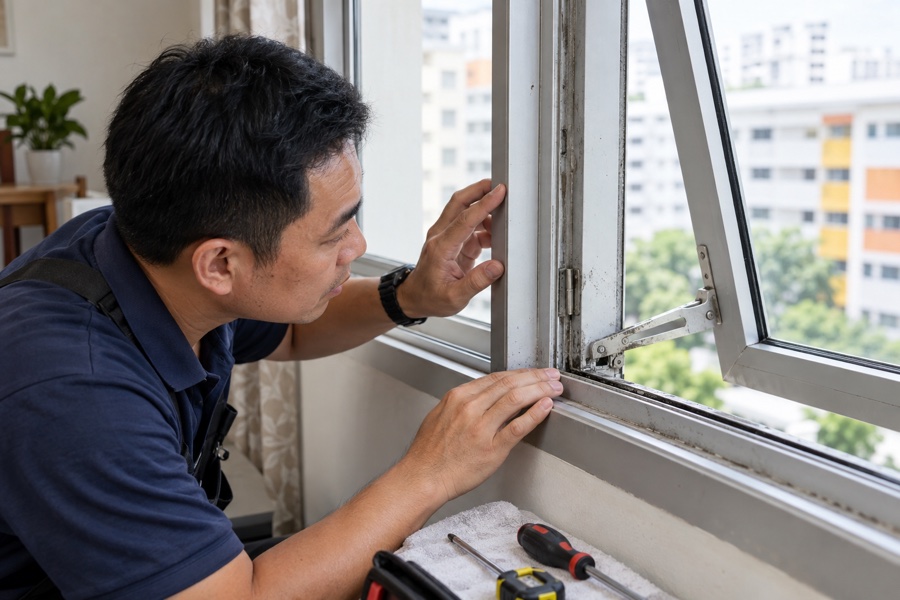
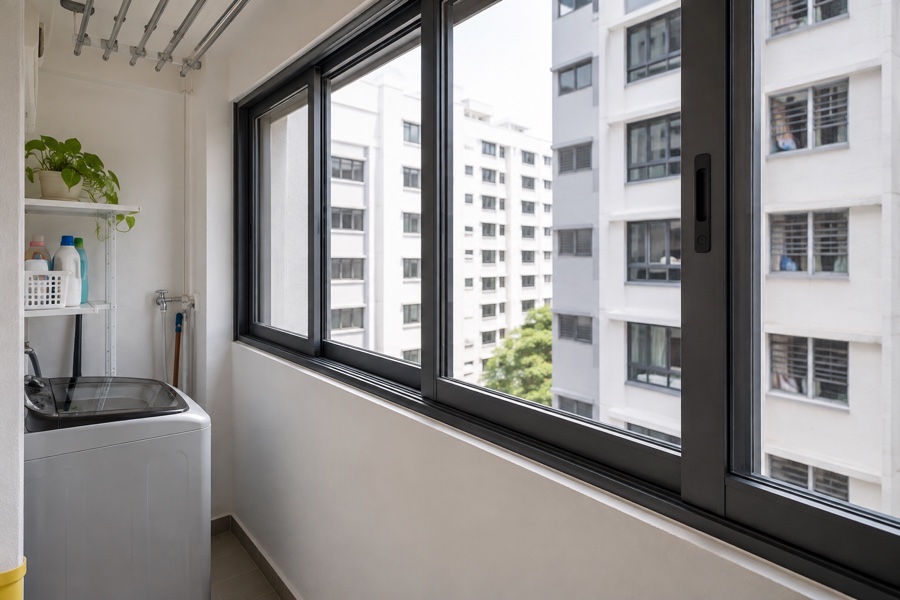
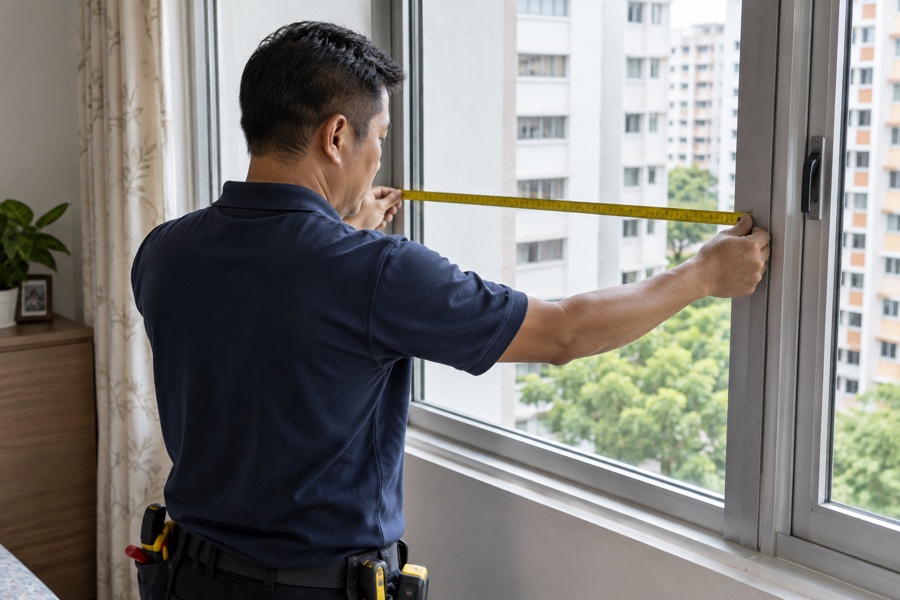
Illustrative views of window condition, type and measurement.
Casement, Sliding and Other Window Choices
Casement windows swing on hinges and can offer a wide opening for ventilation. Their hinges, stays and fasteners must suit the panel and be maintained. Sliding windows move along tracks without projecting into the room or beyond the opening in the same way. Their rollers, tracks, safety stoppers and angle strips need to function properly. Neither type is automatically right for every flat; clearance, access for cleaning and the existing configuration all matter.
Top-hung windows are another option in suitable openings, often considered where ventilation and privacy are priorities. Glass type, frame finish and hardware also affect the finished result. We can discuss these elements during measurement and explain which choices are feasible for the specific opening. A product photograph is useful for visual direction, but the final specification should be based on the actual site measurements and requirements.
Owners should also consider how the window will be used every day: who opens it, whether access is awkward, whether an adjacent grille changes reach, and whether the room faces heavy rain or traffic noise. These practical questions make the selection more useful than choosing solely by appearance.
The surrounding grille can influence the window choice. Confirm whether it will stay, be temporarily removed or need replacement, and whether the new handle will remain reachable. An opening that looks convenient without a grille may be awkward once both products are installed together, so their operation should be planned as a pair.
Site Measurement and Scope of Work
A replacement plan begins with measuring each opening and checking the surrounding frame and wall. Two windows that look alike from inside may differ in size, access or condition. The assessment should record which panels and frames are being removed, the proposed opening style, hardware and glazing, and any work needed around the perimeter. It should also identify practical constraints such as service-yard space, corridor access and the ability to maintain the new window safely.
Ask for a written scope that distinguishes the window itself from related items such as grilles, making good, disposal and any necessary approvals. Where several windows are being replaced, a room-by-room schedule makes the quotation easier to compare and helps avoid ambiguity on installation day. The work area, access and protection of nearby finishes can then be discussed before the job is booked.
We recommend reviewing the final measurements and configuration together before fabrication. The fitted window should operate smoothly, close securely and be checked after installation, with any operating and maintenance guidance explained to the owner.
If the project covers several rooms, ask that each opening be labelled on the scope. Matching finishes across the home can matter, but a service yard and bedroom may have different ventilation, access and privacy requirements. One specification need not be forced onto every room simply for uniformity.
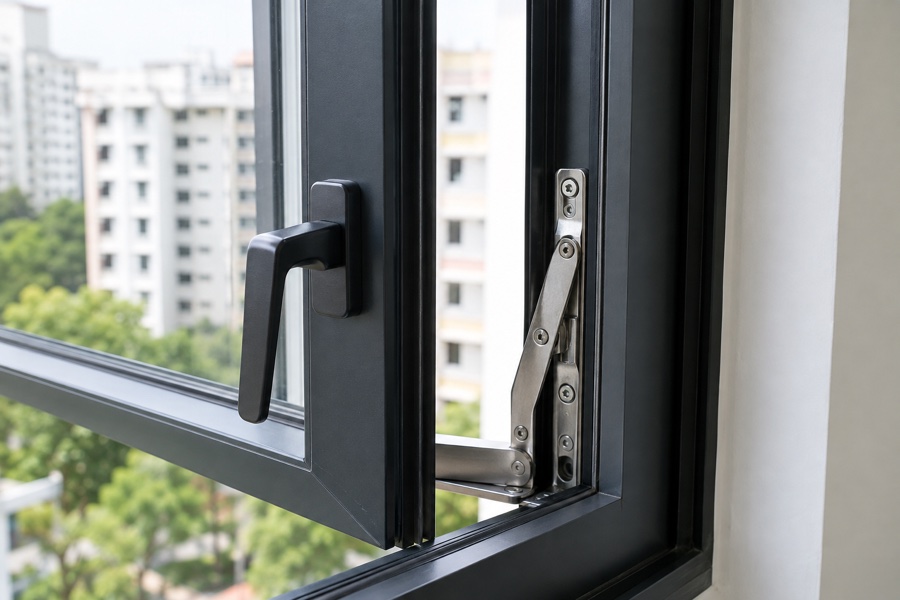
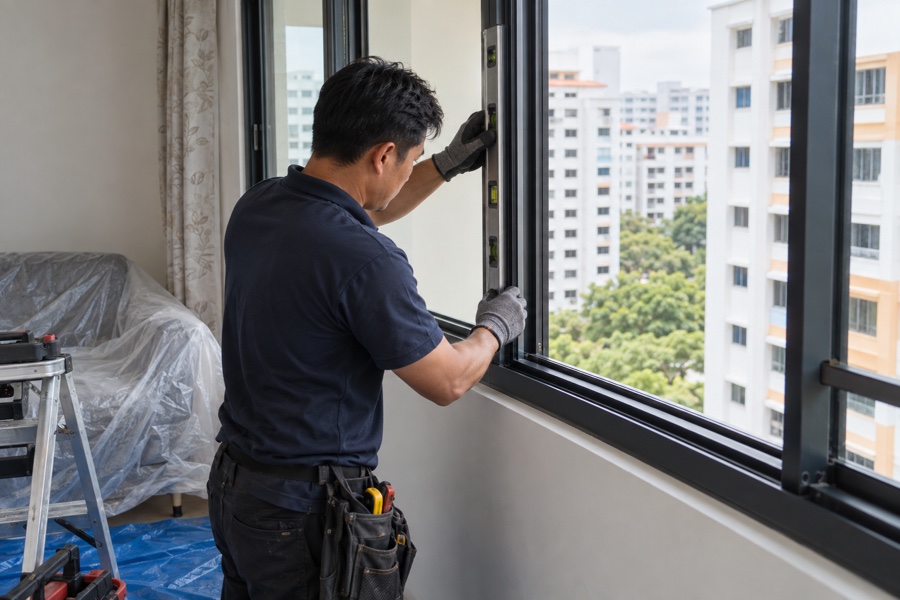
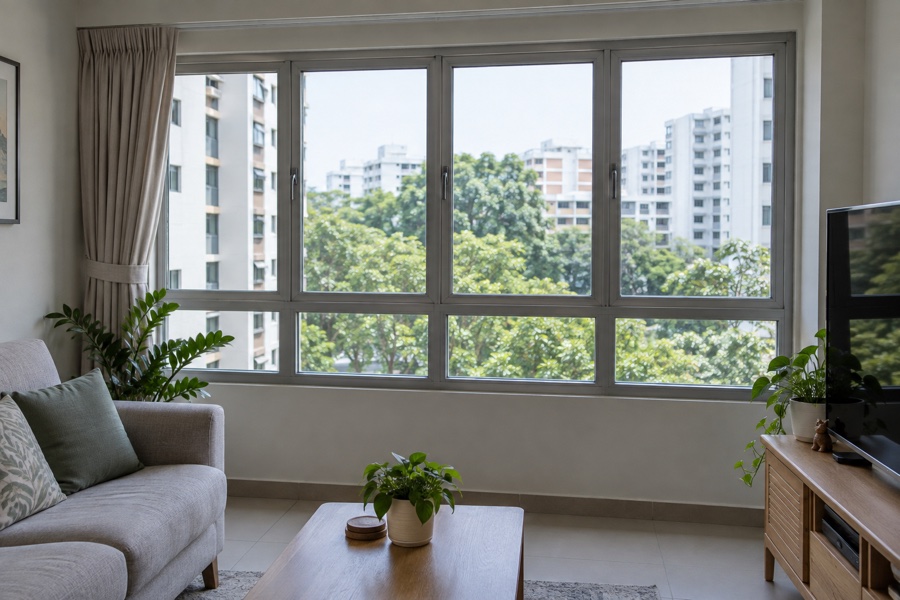
Illustrative views of window hardware, fitting and the finished opening.
HDB Rules and Contractor Checks
HDB requires owners to engage a BCA-approved window contractor listed in HDB's directory for window installation or replacement. The HDB window-works guidelines also set conditions for the work. Confirm the contractor's current listing and the requirements for your particular flat before work begins; a general marketing claim is not a substitute for a current listing.
Existing full-height, three-quarter-height and bay windows need particular care. HDB says replacement of full-height windows is generally not allowed, with permission considered in limited circumstances such as a damaged frame requiring complete replacement. Do not assume a standard replacement proposal applies to these openings. The type of window, any integrated safety barrier and the building's rules may change the process.
The Building and Construction Authority also explains the role of approved window contractors and trained installers in window installation and retrofitting. These official resources are useful when checking a quote or clarifying who should carry out the work. Any approvals and paperwork should be identified in the project scope rather than left as an assumption.
Rules can change, so use the current official guidance at the time of the job. Ask the contractor to explain which steps apply to your proposed work and who is responsible for them. If the opening differs from a standard window, pause the specification until the correct route is clear.
Where a fault appears limited to hinges, catches or tracks, compare this scope with window repair and safety servicing before ordering a whole new assembly.
What to Ask Before Accepting a Quote
A useful quotation should identify each opening, the proposed window type, frame and glass, hardware, removal work and expected sequence. Ask what will happen if the site inspection reveals hidden damage, and whether related work such as grilles is included. This helps compare proposals fairly and prevents a low headline figure from hiding essential parts of the job.
Discuss timing only after measurements and the final specification are known. Lead times depend on the number of windows, fabrication and site access, so a fixed promise made before assessment may be unreliable. Keep the relevant approval information and completion records with your home documents. If you are unsure whether a full replacement is needed, start with an inspection and compare the repair and replacement options for your specific window.
At handover, open and close each window and check the latch, alignment and finish around the perimeter. Record any concern immediately. Keep photographs of the completed work and the written specification together; they will help if you later need servicing or want to match another window in the flat.
Frequently Asked Questions
Can I replace HDB windows with any design? | The replacement must suit the existing opening and comply with HDB's window-works requirements. Have the proposed design checked before fabrication. |
Who can replace windows in an HDB flat? | HDB requires a BCA-approved window contractor listed in its directory. Check the contractor's current listing for your project. |
Should a faulty window always be replaced? | No. Some faults involve replaceable components. An inspection can establish whether repair or replacement is appropriate. |
Can full-height windows be replaced? | HDB generally restricts replacement of full-height windows; limited permission may be considered for cases such as a damaged frame. Seek advice for the specific opening. |
What should a replacement quote include? | Ask for the openings, window types, glass and hardware, removal and disposal, related works and any required approvals to be stated clearly. |