
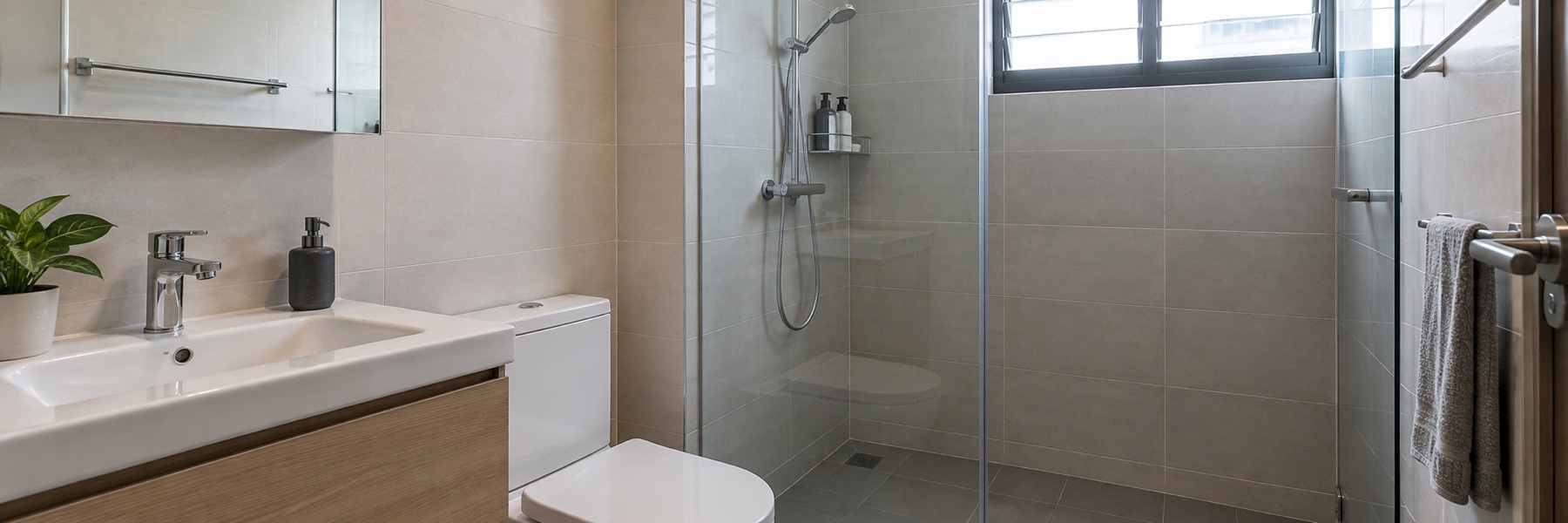
A Practical Bathroom Layout
Shower Screens for Everyday Use
A shower screen helps separate the wet area from the rest of a bathroom while keeping the room light and easy to use. Guardian Windows includes shower screens within its existing door and glass work. The right arrangement depends on the bathroom's dimensions, the shower position and the space needed to enter, clean and move around comfortably.
A screen is more than a glass panel. Its opening direction, fixings, seals and position relative to the floor all affect daily use. Before selecting a style from a photograph, measure the actual room and note nearby fixtures such as the toilet, basin, towel rail and bathroom door. The aim is a layout that manages splashes without making a compact bathroom feel difficult to use.
The screen should serve the way the bathroom is actually used, including by children or older occupants where relevant. A generous opening may matter more than a minimal frame, and an easy-to-reach handle can be more valuable than a fashionable fitting. Discuss these needs before settling the glass layout.
Fixed, Sliding and Swing Options
A fixed panel can create a simple division where the shower has enough depth and a practical entry path. A sliding screen may suit a room with limited swing clearance, while a hinged door needs space to open safely. Corners and irregular openings may call for a different arrangement. Each option has trade-offs in access, cleaning, hardware and the amount of water it contains.
Guardian's current Doors page describes framed, semi-frameless and frameless screen styles. A frame can provide a more defined enclosure; a frameless design gives a lighter look but still requires suitable hardware and secure fixing. The choice should account for wall condition and the level of support the panel needs. A visual preference is important, but it should not override safe installation.
For a small HDB bathroom, check whether a sliding or compact swing arrangement leaves enough room for normal movement. In a larger bathroom, a fixed panel may be sufficient if the shower head and floor slope keep splashes within the wet zone. The measured layout should guide the final choice.
If the shower area is beside a toilet or basin, test the proposed door movement against those fixtures. A door can look viable on a plan but feel cramped in use. The installer should mark the swing or sliding path, entry gap and fixed-panel position on the measured space.
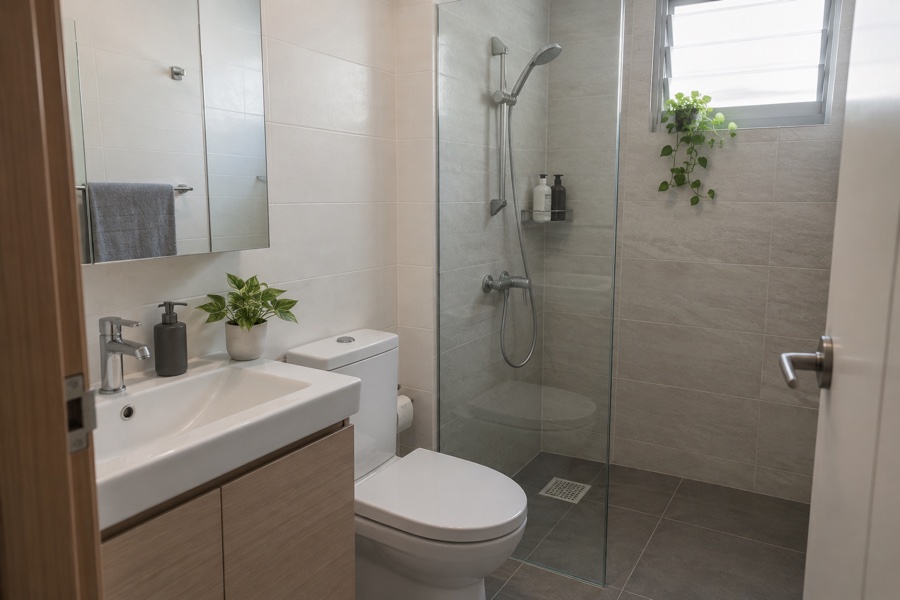
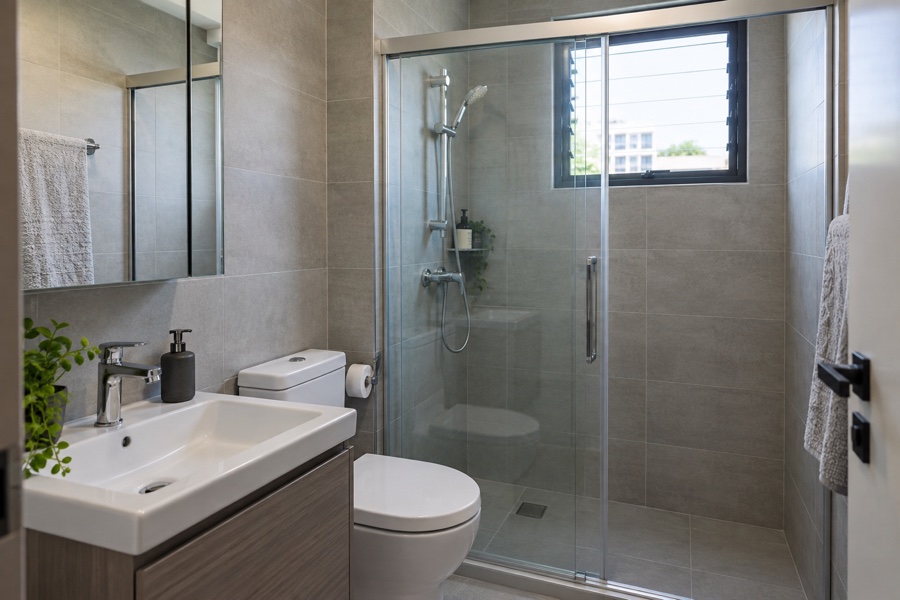
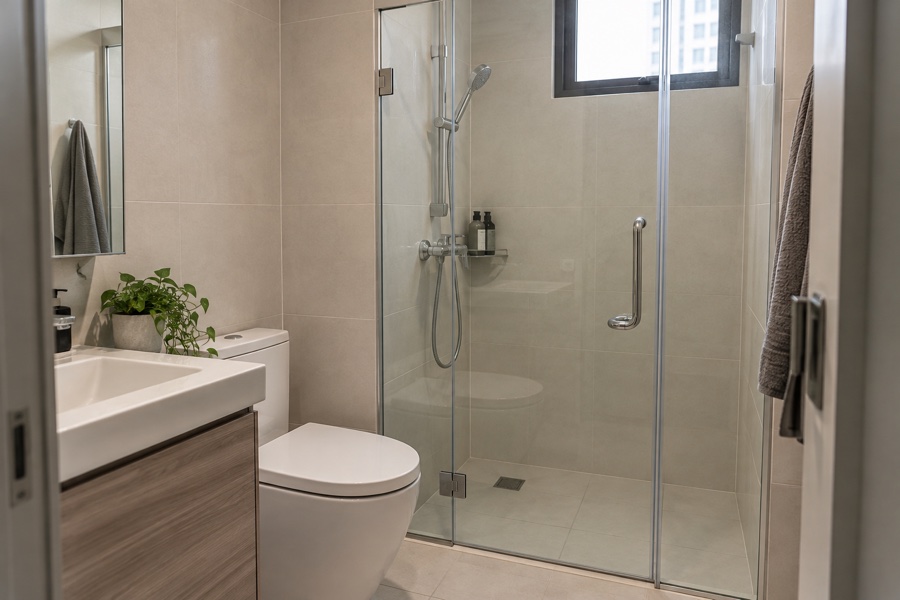
Illustrative views of shower screen styles and fittings.
Glass, Hardware and Finishes
The current Guardian range describes tempered glass shower screens. Glass thickness, panel size and hardware should be specified for the chosen design and fixing conditions. Ask how the panel will be supported, how the door will close and what seals or sweeps are included. These details affect stability and water control as much as the outline of the screen.
Handles, hinges and tracks should be comfortable to use and reachable for cleaning. A heavily detailed track may be harder to maintain in a room used every day. Finish choices should sit well with existing fittings, but a bathroom's humidity and routine cleaning needs are more important than matching a catalogue picture exactly.
Glass can be clear, textured or otherwise finished where suitable options are available. Discuss the amount of privacy and light you want before finalising the specification. Any claim about a particular coating, treatment or performance should be tied to the actual product offered, rather than assumed for all glass screens.
A wet bathroom also needs materials that are easy to keep clean. Ask where water may collect around tracks, hinges and seals. If privacy glass is being considered, view a sample under bathroom lighting where possible. The choice affects both appearance and the amount of cleaning needed to keep the screen looking clear.
Measure the Wet Area
Site measurement should cover the wall-to-wall dimensions, height, floor level, shower head position and entry space. The installer should also check whether the walls are plumb and suitable for the proposed fixings. Uneven surfaces and an existing kerb can change the panel sizes and sealing approach. A custom fit is particularly important where an old screen is being replaced.
Water control depends on the whole wet-area design. A screen reduces splashing, but it cannot compensate for a floor that slopes away from the drain or for water directed straight through the entry gap. The proposed design should show where water is expected to run and how the threshold or door edge will work. Discuss any existing leakage before fitting a new screen so the actual cause is not hidden.
A clear quote should list the panels, opening type, hardware, seals, removal of any old screen and the finishing work. Confirm what happens if the measured bathroom differs from an initial estimate based on photos.
Before replacement, inspect any dampness around the old screen and adjacent wall. A loose seal may be the cause, but water can also come from another bathroom detail. A new panel should not be installed over an unresolved leak. Clarifying the source protects both the new work and surrounding finishes.
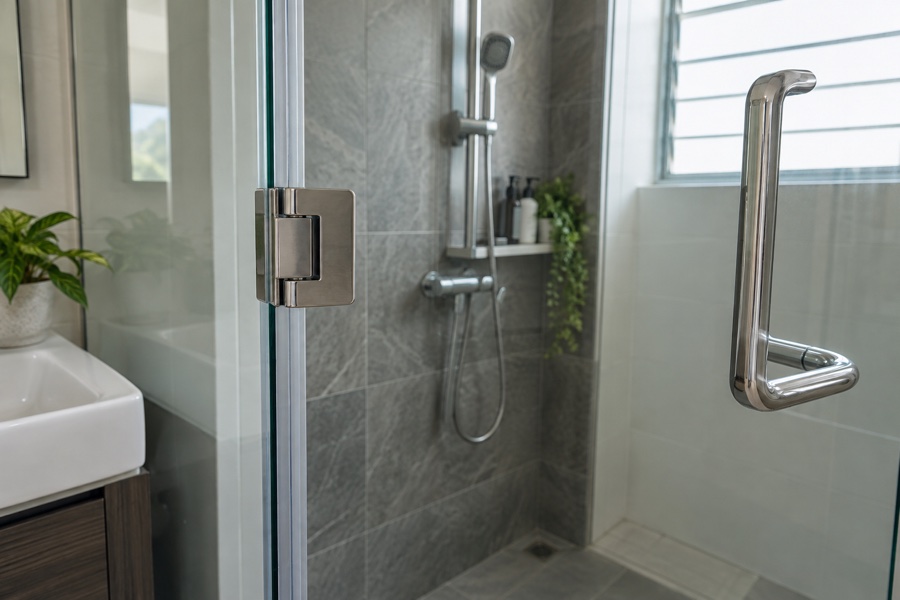
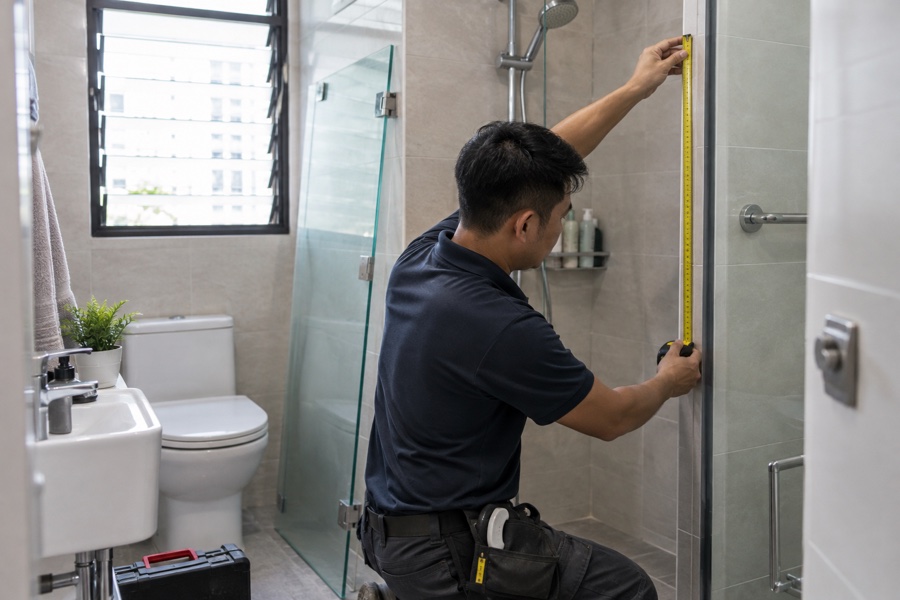
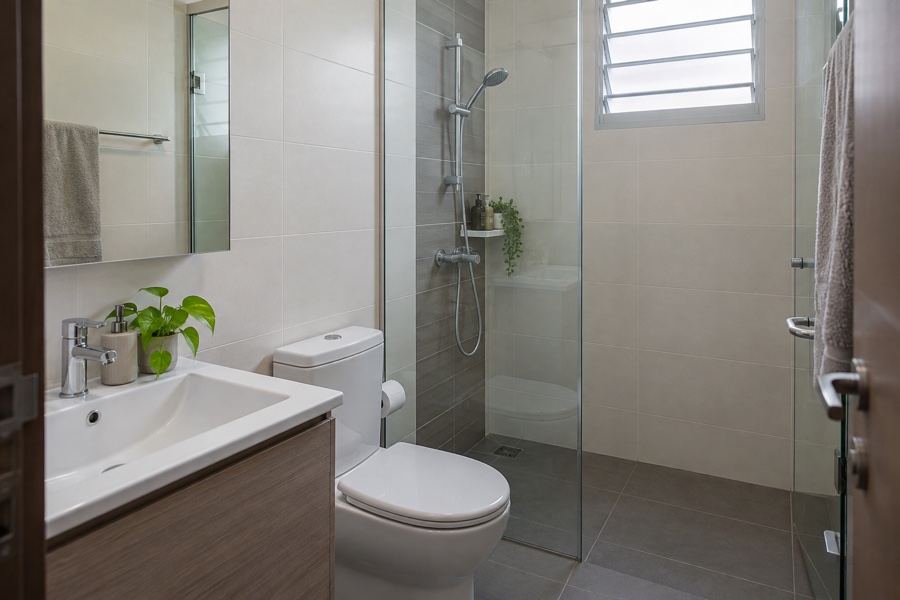
Illustrative views of shower screen styles and fittings.
Installation and Handover
Installation should leave the screen securely fixed, the door moving freely and the wet-area edge finished as specified. Nearby fixtures and floor surfaces need protection while the old screen is removed and the new one is installed. The installer should explain any curing time for sealant before the shower is used; this depends on the material applied, so follow the instructions given for the actual job.
At handover, operate the door or slider and check the alignment, handle and closing contact. Ask which gaps are intentional and where seals have been placed. A small amount of water may still escape in some layouts, especially an open fixed-panel design, so the expected performance should be explained before installation.
Keep any product and care information. If the screen begins to bind, leak differently or move at its fixings, arrange an inspection rather than forcing the panel. Safe operation and easy cleaning are part of a useful design, not just finishing details.
Where a screen is fixed into tile, the fastening method and existing substrate matter. Ask how the panel is supported and which surfaces will be drilled. Confirm that the proposed screen leaves access to drains and other fittings for routine cleaning and maintenance. These practical points are harder to change after fabrication.
Cleaning and Choosing Well
Regular cleaning helps keep glass and hardware presentable in a humid bathroom. Wipe accessible glass and seals using methods suitable for the actual finish, and keep tracks clear where the design includes them. Avoid abrasive tools that may damage coatings or hardware. Check whether hinges, handles and seals remain secure as the screen ages.
Before deciding, compare options in the context of your own bathroom: entry width, swing clearance, water direction, cleaning access and the look you prefer. Ask to see the proposed configuration marked on the measured space. A well-chosen shower screen should make the bathroom easier to use while controlling everyday splashes. If the opening also calls for a separate bathroom door, that can be discussed alongside Guardian's broader door options.
When comparing quotes, note whether measurements, removal, disposal and sealing are included. The cheapest panel may not be the best value if the door clearance or water control is poorly resolved. A complete drawing or clear written description helps you understand what will actually be installed.
HDB's toilet fittings care guide recommends regular shower-screen cleaning and replacing failing sealant. Ask which seals and hardware are included in the proposed screen so future care is clear.
Frequently Asked Questions
Which shower screen suits a small bathroom? | It depends on the measured space and clearances. Sliding or compact layouts can help where a swing door would obstruct fixtures. |
Do you offer frameless screens? | Guardian's Doors page lists frameless, semi-frameless and framed styles. The suitable option depends on the opening and support surfaces. |
Will a screen stop every splash? | Water control depends on the screen layout, shower direction and floor drainage. An open panel may allow some water beyond the wet area. |
Can an old screen be replaced? | The old installation and surrounding surfaces should be assessed before a replacement is measured and specified. |
What should be in the quotation? | Ask for the panel design, glass, hardware, seals, removal work, finishing and any use or care instructions. |