
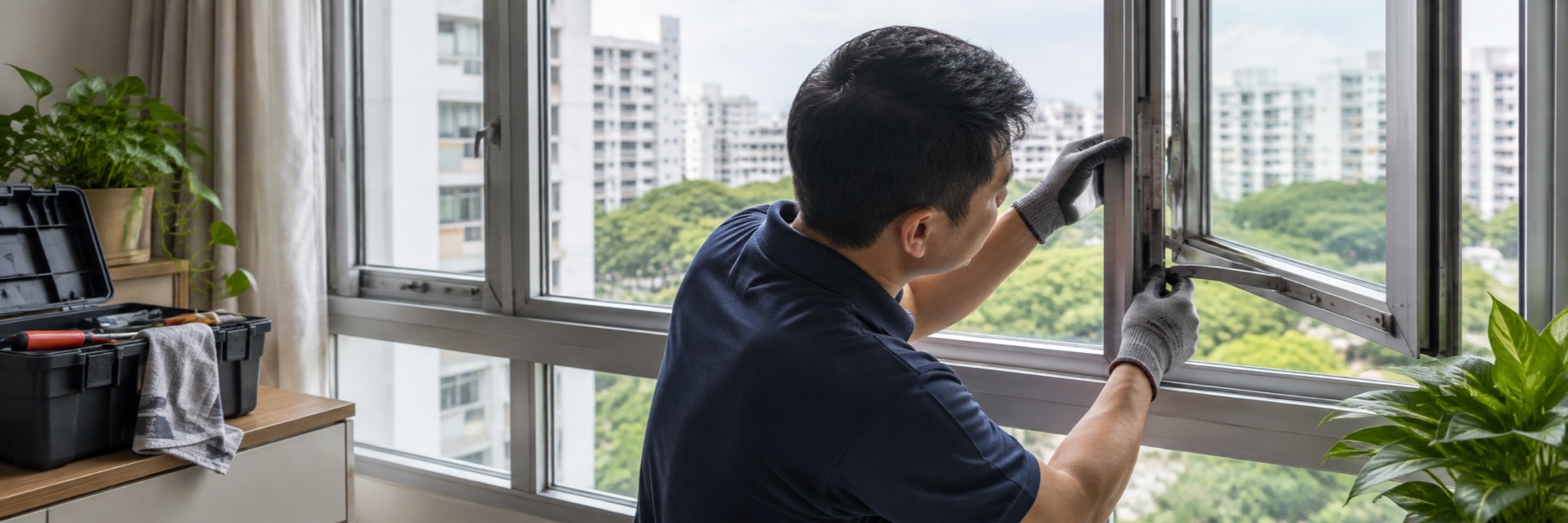
Inspect, Repair and Maintain
Find the Cause of the Window Fault
A window that sticks, rattles, will not latch or lets in rain needs more than a quick adjustment made by guesswork. The same symptom can have several causes: a worn component, a misaligned panel, accumulated dirt, a damaged seal or movement in the frame. Guardian Windows' repair and maintenance service starts by looking at the complete assembly before recommending a remedy.
Tell us when the problem began, whether it follows heavy rain or wind, and which opening is affected. Photographs can help explain the fault, but an on-site check may still be needed to assess the condition and fit. The purpose is to identify what can be repaired safely and when replacement is the more reliable option.
A repair request is more useful when it names the symptom rather than guessing the part. For example, ‘the panel drops when opened’ is more informative than ‘the hinge is broken’ if the cause has not been checked. This helps avoid ordering the wrong component or overlooking a problem in the frame.
Casement Window Problems
Casement windows rely on hinges or friction stays to carry the panel and guide its movement. Over time, the hardware can loosen, corrode or become difficult to operate. A window may sag, catch against the frame, resist closing or fail to stay in position. Latches and handles may also wear. These symptoms should be checked together: replacing a handle will not solve a problem caused by a distorted sash or failing hinge.
The inspection should look at fasteners, stays, alignment, glass and the surrounding frame. Where a component can be replaced, the correct size and fixing method matter. If the window is at risk of detaching, stop operating it and arrange professional attention. BCA's window safety guidance specifically highlights loose or corroded casement fasteners and the need for appropriate retrofitting.
After a repair, the panel should open and close without unusual force, seat properly against the frame and lock as intended. The technician should explain any remaining wear or maintenance needs rather than treating a temporary improvement as a complete fix.
Where several casement windows share an age and exposure, an inspection can check them together even if only one currently shows a problem. That does not mean each needs repair; it simply helps identify whether other fasteners or stays show similar wear. The findings should be reported by window so decisions remain specific.
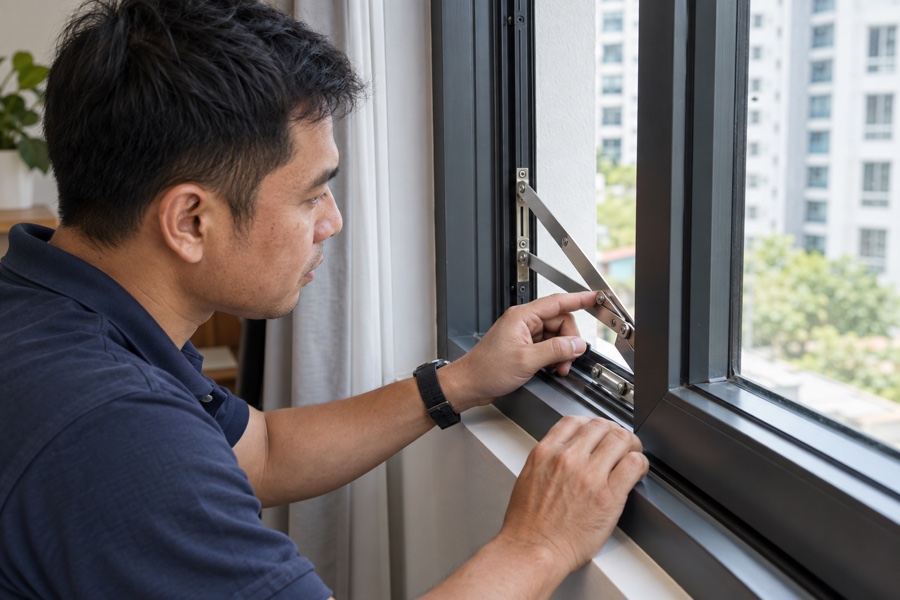
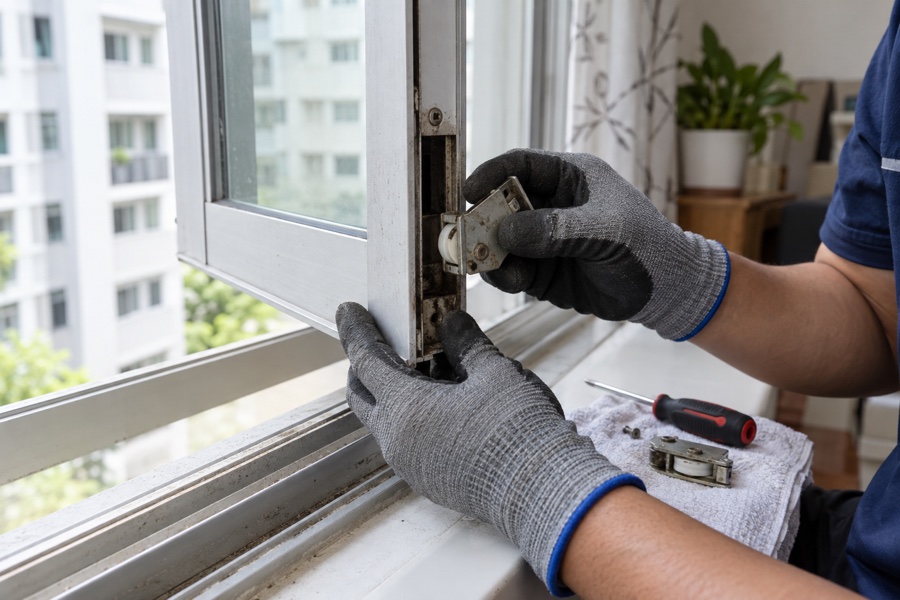
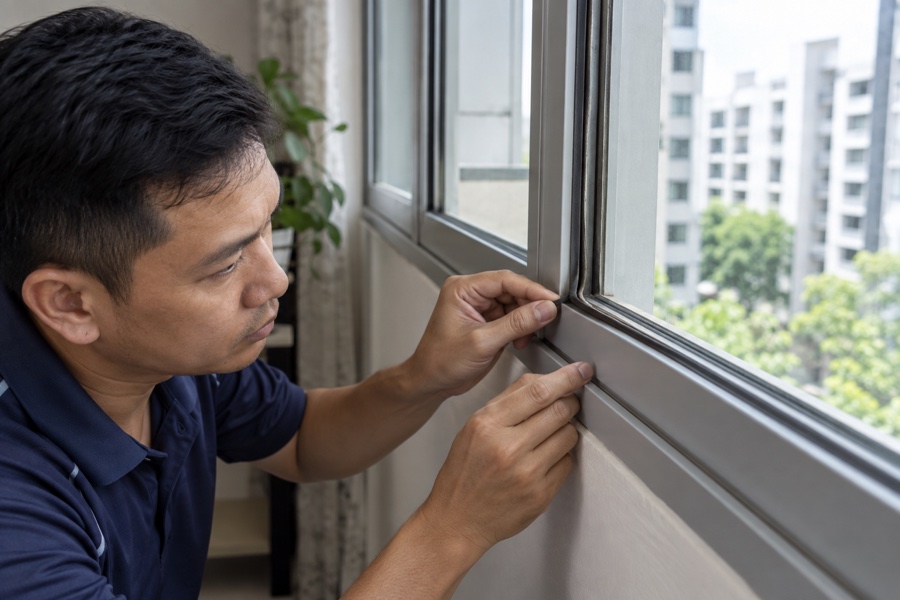
Illustrative views of window faults and servicing details.
Sliding Windows and Track Issues
Sliding panels can become hard to move when tracks fill with debris, rollers wear or the panel goes out of alignment. The symptom may be dragging, a grinding sound, a panel that jumps or a latch that no longer lines up. Cleaning the track is a useful first step, but forcefully pushing a jammed panel can make damage worse.
A proper check considers the rollers and tracks as well as the safety stopper and angle strip that keep the panel in place. BCA advises homeowners to check these safety parts, keep tracks clean and replace worn components through an approved contractor where necessary. If a panel feels loose in the track, avoid repeated use until it is assessed.
Not every fault calls for a new window. A roller, stopper, seal or latch may be serviceable while the frame remains sound. Conversely, a damaged track or badly distorted frame can limit the value of a component repair. The recommendation should explain that distinction and set out the work proposed for each affected opening.
A sliding panel should not need a shove to move along its track. If cleaning accessible debris does not improve movement, stop before forcing it. Track damage, a worn roller or misalignment can each create resistance. The service recommendation should say what was found and how the proposed adjustment or part addresses it.
Glass, Seals and Water Entry
Cracked or loose glass should be treated as a safety issue. Keep the area clear, avoid pressing on the pane and arrange an assessment. The repair approach depends on the glazing, frame and how the pane is held. A visible crack cannot simply be described as a seal problem; the glass and its fixing need to be checked.
Water entering around a window can have several paths, including a worn perimeter seal, poor closing contact, blocked drainage or deterioration outside the frame. Note where the water first appears and whether the problem occurs only in wind-driven rain. Those details help the inspection, but a reliable solution still depends on locating the actual path. Applying sealant without identifying it may hide the issue for a short time.
We can discuss whether the repair involves a component, glazing, adjustment or a broader replacement. For windows with repeated faults or significant frame damage, see our window installation options as a separate decision.
After water entry, dry the area and photograph the stain pattern if safe. Marking when it happened can help distinguish a rain-driven leak from condensation or another source nearby. Repairs should address the source rather than the visible water mark alone, and a follow-up check may be useful after the next comparable rainfall.
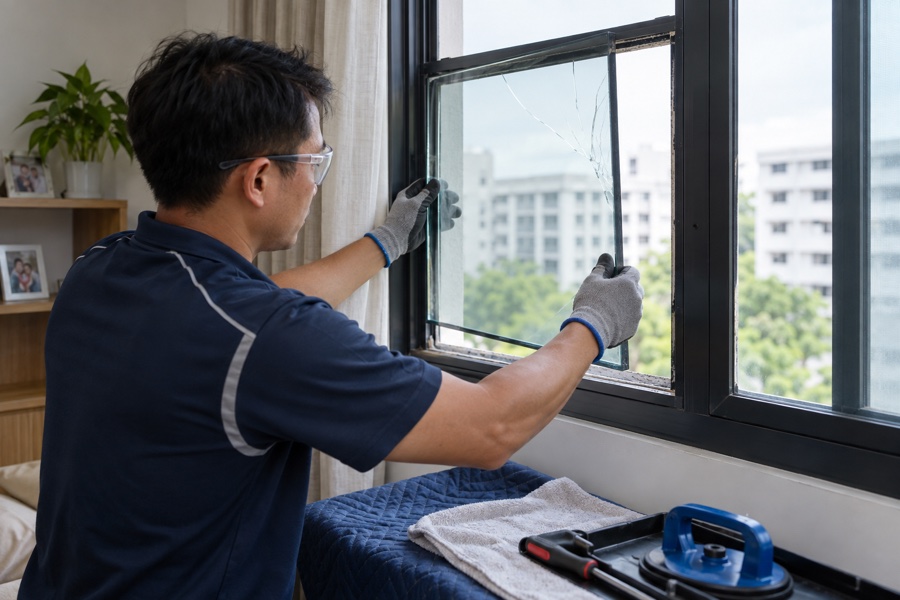
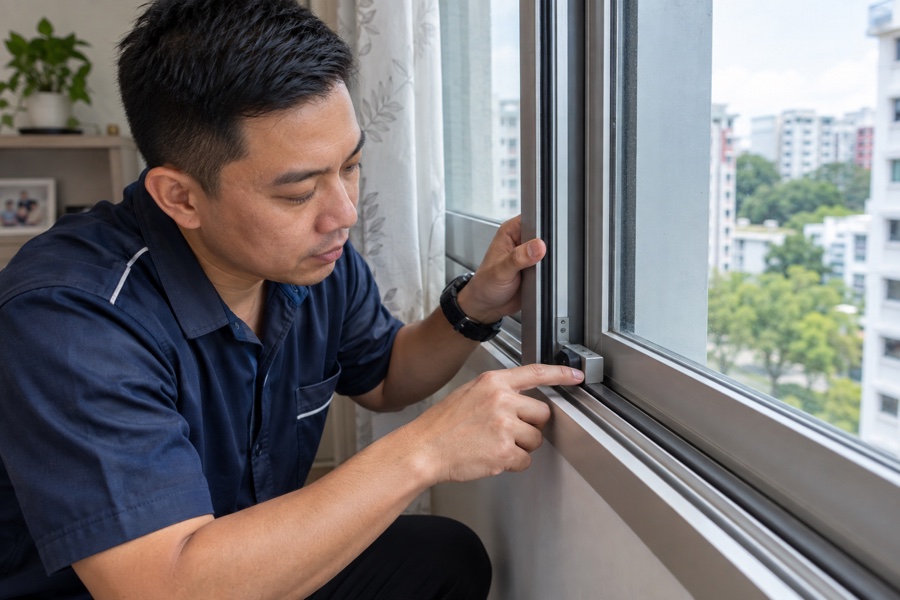
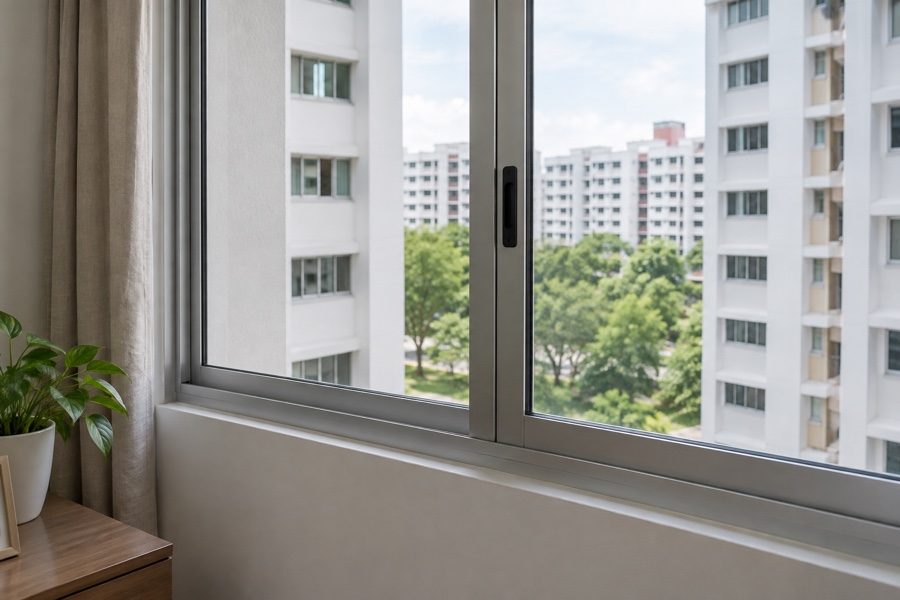
Illustrative views of window faults and servicing details.
Safety Servicing and Routine Checks
Regular checks make it easier to spot wear before a window becomes unsafe. Look for rust or looseness around casement fasteners; check that sliding panels move smoothly and retain their stoppers and angle strips; and watch for cracked glass or faulty locks. Clean accessible tracks and joints without dismantling safety-critical parts. If anything seems unstable, keep the window closed where safe and arrange a professional inspection.
BCA recommends a simple check, clean and change approach to window maintenance. Its guidance explains which signs owners can notice and when an approved contractor should replace components. The right servicing scope depends on window age, type and condition. A safety visit should record the openings checked, the faults found and the work carried out or recommended.
Retrofitting and repairs have regulatory requirements of their own, particularly for HDB flats. Ask who will perform the work and what completion record applies. The objective is a window that operates safely in daily use, with clear advice about any faults that remain.
Regular owner checks do not require dismantling the window. Look and listen during normal operation, and keep accessible surfaces clean. If a fastener is corroded, a stopper is missing or a panel does not feel secure, leave the repair to an appropriately qualified contractor. Safety-critical hardware deserves the right parts and fixing method.
How to Prepare for a Repair Visit
Identify the affected room and window, note the symptom, and photograph the panel and hardware if it is safe to do so. Do not remove a loose part or try to support a heavy panel yourself. Clear access around the window so the technician can inspect the frame and operate the panel safely.
After assessment, ask which parts need attention, whether the work is a repair or a replacement, and what the quote excludes. If a fault affects several windows, list each one separately; a common symptom does not always have the same cause. Before the visit ends, check the operation together and keep any maintenance or completion information provided. A clear explanation of the cause makes future care easier and helps you decide when another inspection is worthwhile.
A clear repair record is useful when a future occupant or technician asks what was changed. Keep the date, affected opening, component and any advice about follow-up. If replacement is recommended instead of repair, ask why: the answer should refer to the actual condition and expected reliability, not just the age of the window.
If the frame or glazing is beyond a practical repair, our HDB window replacement guide explains the questions to ask about a new assembly and the applicable HDB process.
Frequently Asked Questions
Can a stuck sliding window be repaired? | Often, but the cause must be checked. Tracks, rollers, alignment and safety parts can each affect movement. |
What if my casement window feels loose? | Stop operating it if it may detach, keep the area clear and arrange a professional inspection of the stays and fasteners. |
Does a leak always mean the whole window needs replacing? | No. The source may be a seal, drainage issue or closing fault. An assessment determines whether repair is sufficient. |
How often should I check my windows? | BCA recommends regular checks and maintenance. Watch for loose fasteners, missing sliding safety parts and difficult operation. |
What should I receive after servicing? | Ask for a clear record of the windows checked, faults found, work completed and any further action recommended. |