

Understand Your Noise Problem
Windows for a Quieter Room
Traffic, nearby activity and other outdoor sounds can make a room uncomfortable even when its windows are closed. Guardian Windows' window range includes soundproof and double-glazing options. The useful first step is to identify what you hear, where it enters and what the existing window is doing. A new pane alone may not solve sound travelling through gaps or other parts of the room.
“Soundproof” is a common search term, but no ordinary residential window makes every external sound disappear. A practical proposal should describe a noise-reducing system, its suitability for the opening and realistic limits. We can assess the current window and discuss whether repair, better sealing, a different glazing assembly or full replacement is the right route.
It helps to identify the time and pattern of disturbance before discussing products. A bedroom affected overnight may call for a different priority from a study bothered by daytime traffic. Note whether the problem persists when the window is firmly latched, because that can reveal a fault worth repairing before selecting new glazing.
How Glass and Frames Work Together
Glass choice is one part of acoustic performance. Different pane thicknesses, laminated glass and double-glazed units can change how sound passes through a window. The frame, gaskets, joints and installation around the opening matter too. A high-specification pane fitted into a leaking frame may deliver less improvement than expected. The whole assembly should be considered, including how tightly it closes.
Double glazing uses two panes separated by a sealed space. It is often considered for comfort as well as noise, but its effectiveness depends on the actual glass make-up and frame. It should not be assumed that every double-glazed unit performs alike. Ask what is being proposed and why it fits the particular noise source and window size.
For an existing window, inspection may reveal worn seals, poorly closing hardware or gaps that merit attention before replacement. Our repair and retrofitting overview covers these kinds of issues. A proposal should distinguish what can be improved on the current assembly from what requires a new window.
Ask whether any claimed acoustic figure is for glass alone or for a complete tested window. The distinction matters because seals, frame joints and site workmanship can limit the result. If no comparable test information is available, the proposal should use measured descriptions of the assembly and avoid promising a particular reduction.
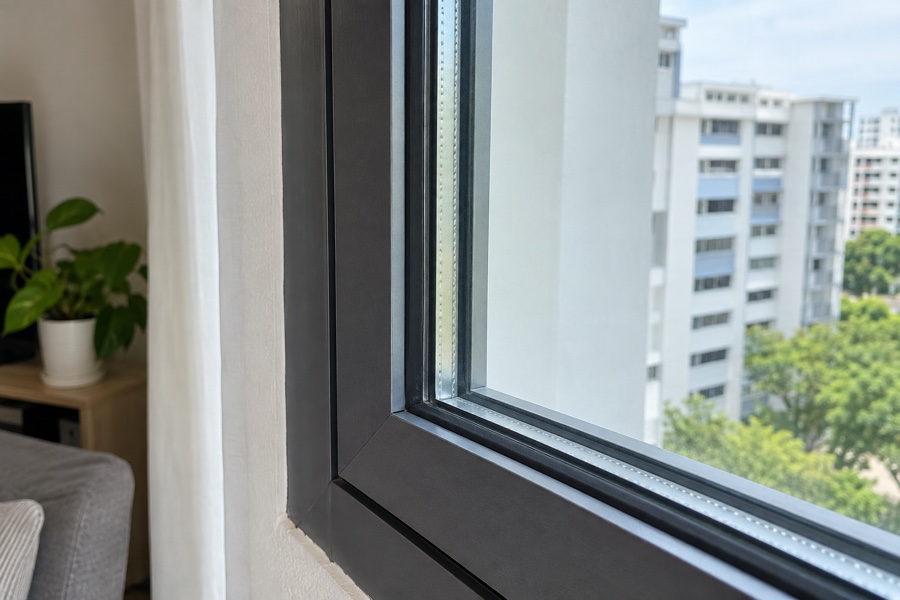
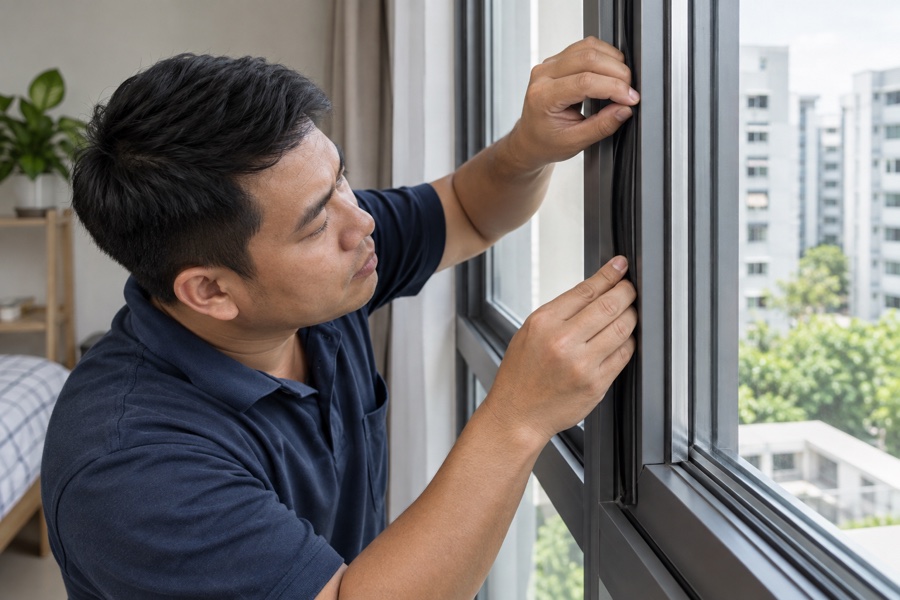

Illustrative views of windows, glazing and room conditions.
Identify the Source and Path of Noise
Describe the sounds you want to reduce: steady traffic, voices, aircraft, motorcycles or short bursts from nearby activity. Note whether the noise is worse with wind, from a particular direction or in one room only. These details help identify whether the window is likely to be the main path. Sound can also enter through ventilation openings, doors and other gaps, so treating only the glass may leave a noticeable route untreated.
Inspect the window when closed. Does it latch firmly? Are seals compressed evenly? Can light or air be felt around the edges? These observations can guide the assessment, although they do not replace a proper inspection. If you already have a glazing specification or building rule, bring it to the discussion so the proposed system can be checked against it.
Be cautious about a single percentage or decibel claim without test conditions. Performance figures refer to particular assemblies and laboratory methods; results in a lived-in room depend on the full installation and other sound paths.
The loudest sound is not always the easiest to reduce. Low-frequency traffic rumble, voices and sudden sharp sounds behave differently. A useful consultation asks which sounds are most disruptive and whether the room has other openings. This steers the discussion towards a realistic improvement rather than an all-purpose label.
Choosing an Opening Style
The way a window opens influences how its seals meet the frame. Casement, sliding and other systems have different hardware and closing arrangements, as well as different needs for ventilation and cleaning. The best choice is not purely acoustic: it must suit the opening, building requirements and daily use. A system that is awkward to operate or maintain may be a poor fit even if its brochure specification looks attractive.
For an HDB flat, the proposed window and installation must comply with HDB's window-works guidelines. Condominium owners may also need to check management rules about exterior appearance. Discuss these constraints before selecting a frame or glass arrangement. The quote should show the complete proposed assembly, not just the glass label.
Privacy, daylight, heat and ventilation are worth discussing alongside noise. Where several objectives compete, ask the installer to explain the trade-offs rather than presenting one material as a universal answer.
A window that reduces noise while closed may still need to be opened for ventilation. Think through when you keep it open and whether another airflow route is available. If a new system changes the opening size or style, check how that affects cleaning, curtains and daily access as well as the acoustic goal.
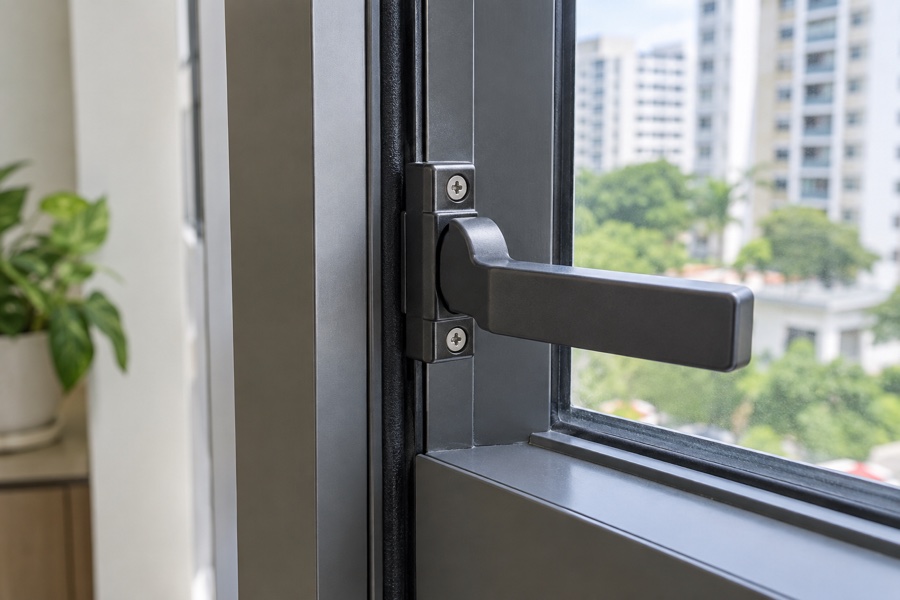
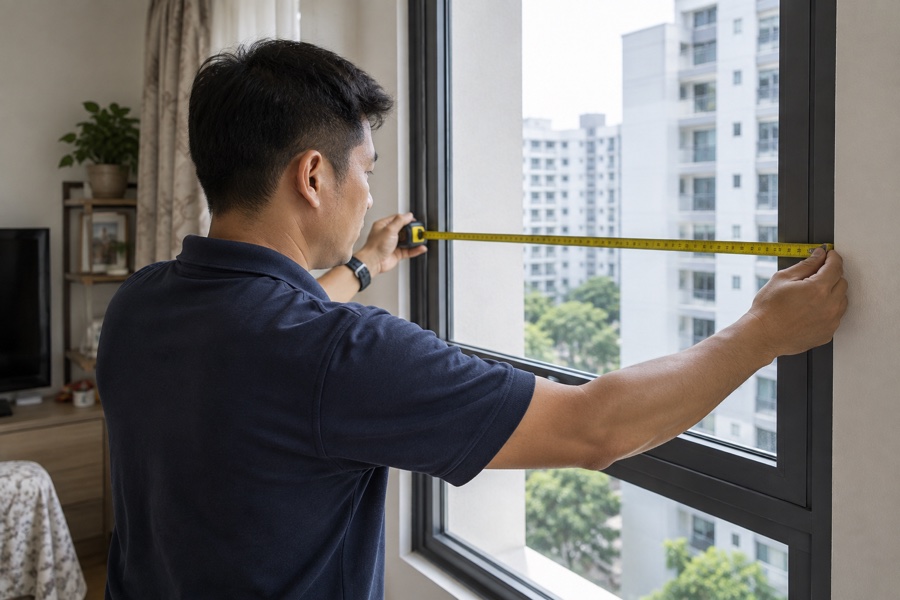
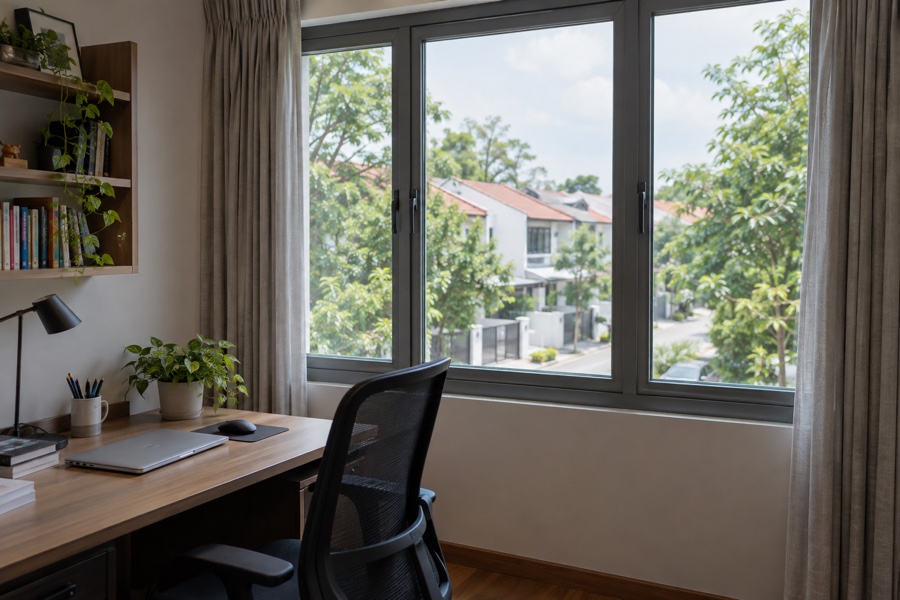
Illustrative views of windows, glazing and room conditions.
What an Assessment Should Cover
A useful assessment checks the existing opening, frame condition, seals and hardware, as well as the direction and character of the noise. Measurements must account for the new frame and glazing assembly. The proposal should identify whether the current frame stays, whether a new unit is needed and how the perimeter will be finished. If another sound path is likely to remain, that limitation should be explained.
Ask for the actual glass make-up and frame specification, any available performance data, the proposed opening method and the work included around the installation. If a figure is quoted, ask what was tested and whether it applies to the complete window system. This makes comparisons between offers more meaningful.
After installation, check that every panel operates and seals as intended. Keep the specification and maintenance guidance, since damaged seals or poorly adjusted hardware can affect comfort later. The goal is a well-fitted solution to the room's particular noise problem, with expectations set before work begins.
If work is proposed in stages, identify which opening to treat first and how success will be judged. That may be more informative than replacing every window at once without knowing which one contributes most to the problem. The site assessment should explain the recommendation and any uncertainty.
Questions Before You Decide
Start with the change you hope to notice: a calmer bedroom at night, clearer conversation near a road, or less disturbance from intermittent sounds. A visit can then focus on the most affected openings. Ask whether any existing faults should be repaired first and whether the proposed system still allows the ventilation and access you need.
Have the quote state the full glazing and frame specification, number of openings, removal work and finishing. Avoid relying on a generic “soundproof” label or a guarantee that every sound will vanish. If noise may enter elsewhere, plan how you will assess the room after the window work. A realistic scope helps you decide whether the investment addresses the problem you actually experience.
Maintenance matters after installation. A damaged gasket or latch that no longer draws the panel closed can allow sound and air through again. Ask which parts should be checked during normal cleaning and how to report a change in operation. Keep product documents so a future repair can use the correct components.
If the proposal involves replacing an HDB window rather than repairing its seals or hardware, use our HDB replacement guide to check the scope and approval questions.
Frequently Asked Questions
Will double glazing remove all outside noise? | No. Results depend on the glass, frame, seals, installation and other sound paths in the room. |
Is thicker glass always better? | Not by itself. The full glazing assembly and its fit matter more than one thickness figure alone. |
Can I keep my existing frame? | That depends on its condition and compatibility with the proposed glazing. It should be checked on site. |
Can an HDB flat have noise-reducing windows? | Potential options must meet HDB's window-works requirements and suit the existing opening. |
What should a quote specify? | Ask for the glass make-up, frame, seals, opening style, number of windows and installation scope. |